LightRun Popularization: Fiber Collimators —
Precision Navigator of Optical Signals - Brief Analysis of Principles & Classifications
As a core passive optical component, the optical collimator integrates an internal optical lens that enables highly efficient control of light signals. It can both convert the divergent Gaussian beam emitted from an optical fiber into a parallel collimated beam, and stably couple parallel free-space light back into the fiber. With this capability, it effectively mitigates energy loss caused by beam divergence and acts as a “precision navigator” for optical signals, guiding them through complex optical networks with stability and accuracy.
To fully understand its performance and value, this article provides a systematic introduction to the working principle, structural classifications.
(I) Working Principle of Fiber Collimators
1. Collimating the optical signal:
When light exits an optical fiber, it diverges due to the fiber’s numerical aperture. The built-in GRIN (gradient-index) lens of a fiber collimator captures this divergent light and precisely transforms it into a parallel beam (collimated light) through controlled focusing. This ensures stable transmission and accurate directionality of the optical signal.
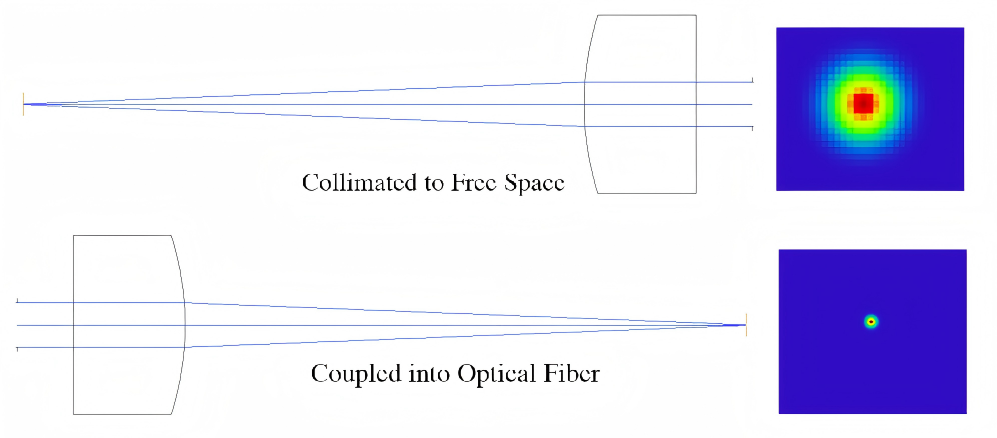
2. Coupling of the optical signal:
When parallel or near-parallel light from free space enters the collimator, the GRIN lens focuses the incoming beam and efficiently couples it into the single-mode fiber. This process enables the conversion of optical signals from free space into fiber transmission, providing essential support for interconnection and expansion within optical communication systems.
(II) Basic Classification of Fiber Collimators
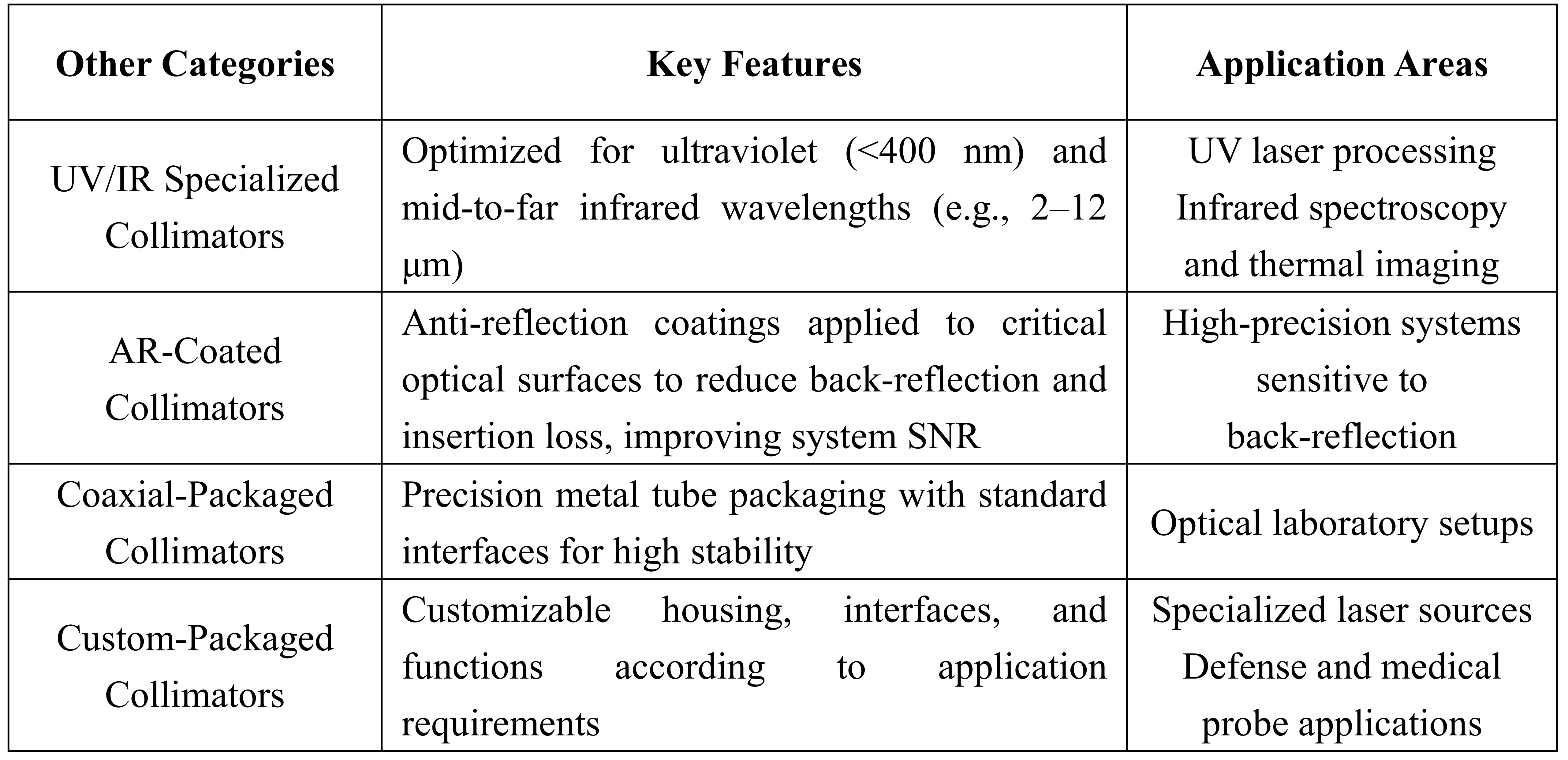
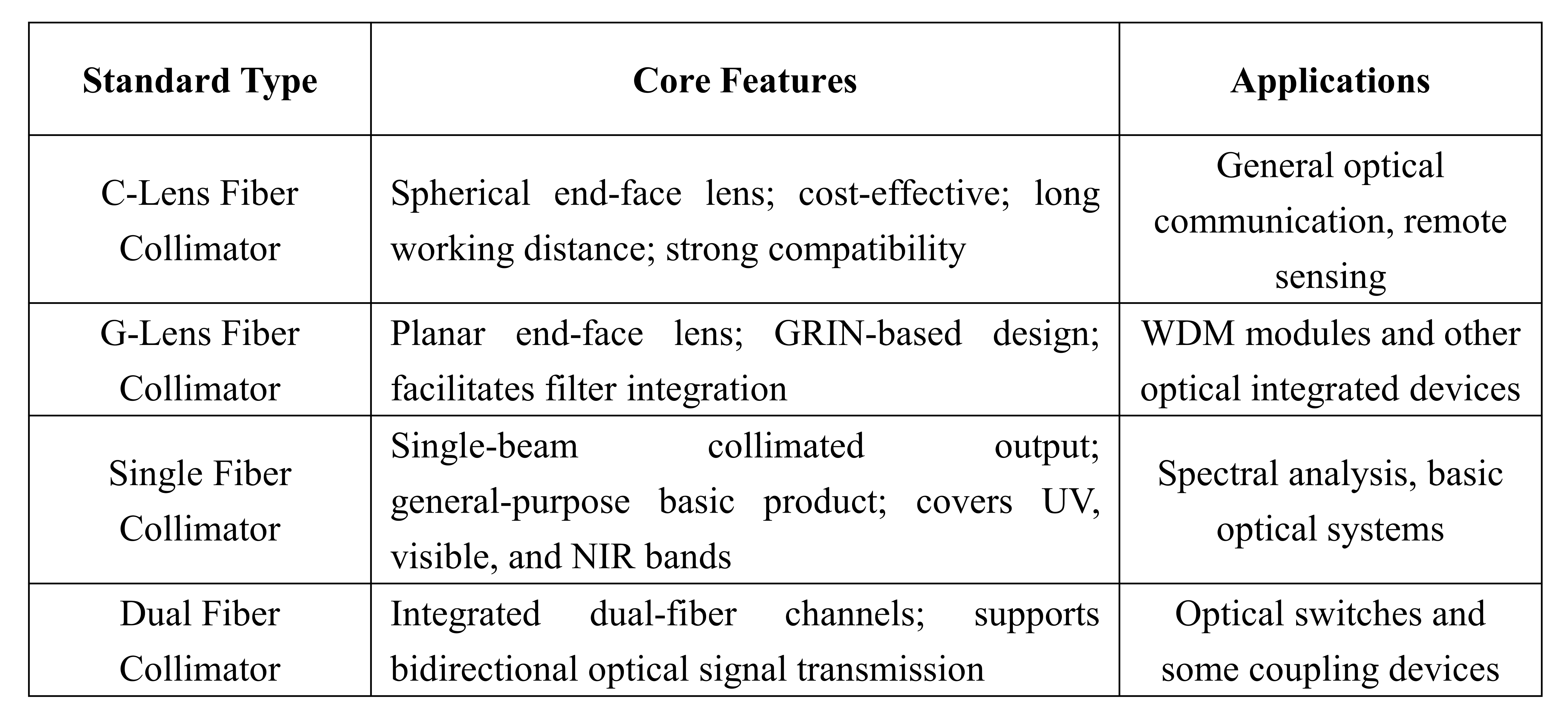
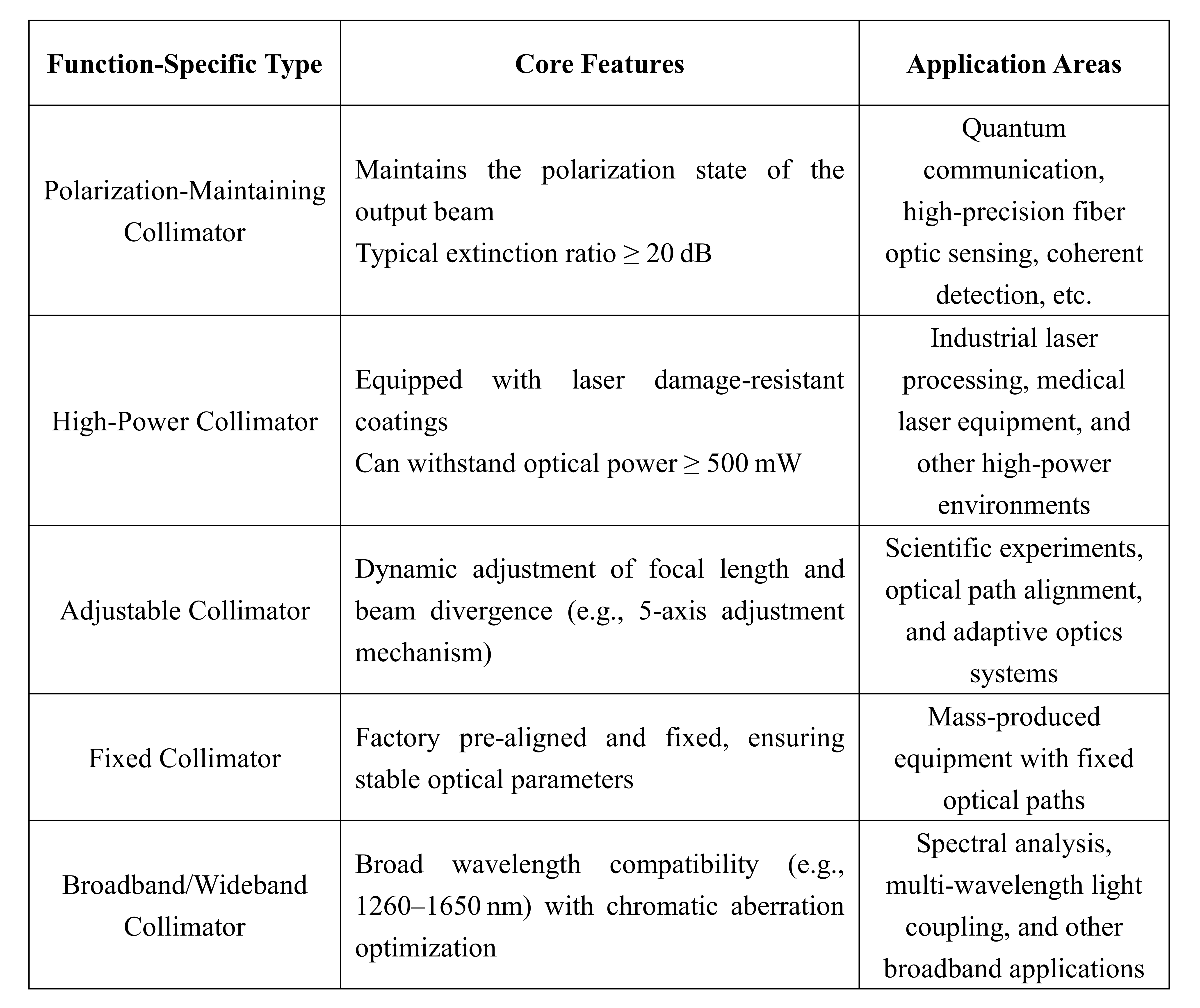
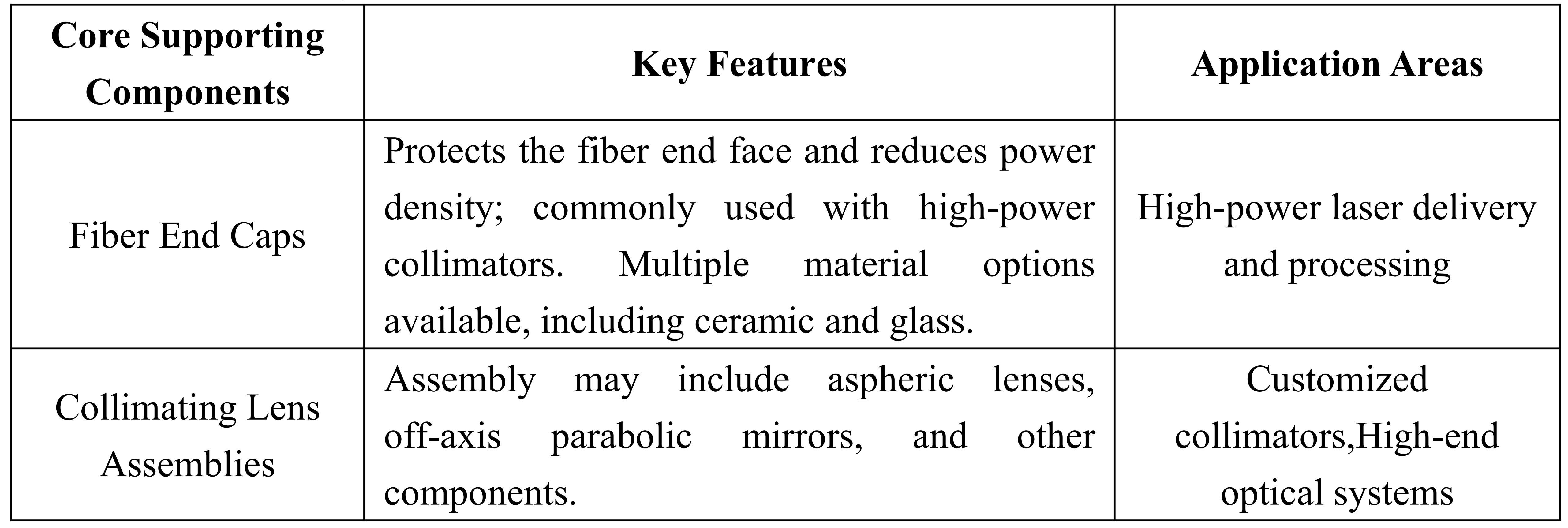
Fiber collimators are key components in optical systems. To facilitate differentiation and selection, the following table provides a basic classification from various perspectives, including standard types, function-specific types, core accessory components, and other categories, along with a brief outline of each type’s core features and typical application areas.
1. Standard Collimators (Classified by Lens/Structure)
2. Function-Specific Collimators (Classified by Application/Performance)
3. Core Accessory Components (Essential for Collimator Systems)
4. Other Classifications